The hardest part of working remotely from anywhere isn’t finding the wifi. It’s building a kit that travels well, sets up in ten minutes, and survives airports, trains, hostels, and the occasional rooftop café — all without weighing 23 kilos.
Tourists pack for a holiday. Digital nomads pack for a working life that happens to move. Those are very different problems. Here’s the system we recommend.
Start with the constraint, not the wardrobe
Most packing guides start with what to bring. A nomad system starts with what you can’t exceed: cabin-size luggage, a personal item that fits under the seat, and a combined weight you can comfortably carry up four flights of stairs to a walk-up apartment in Lisbon. That last part is non-negotiable. Check a bag once and you’ll never trust it again.
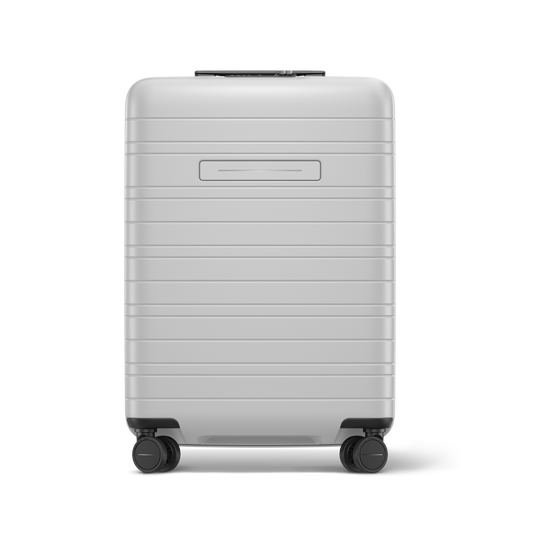
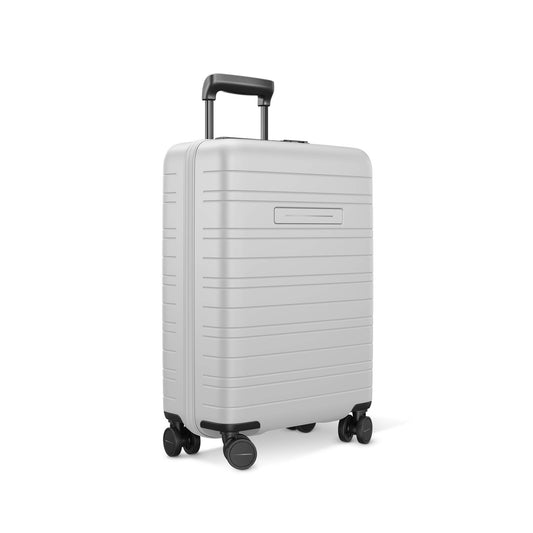
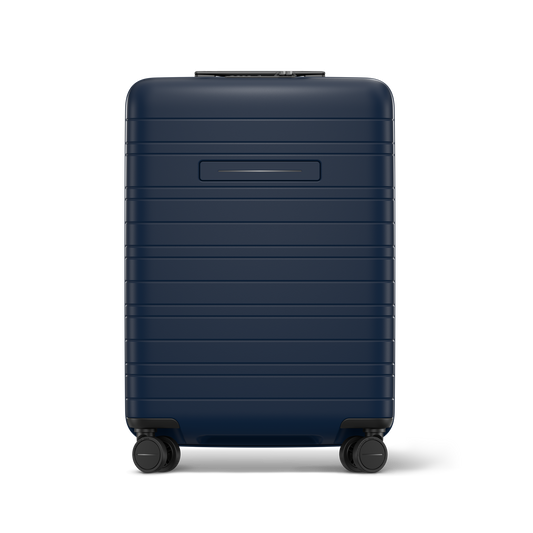
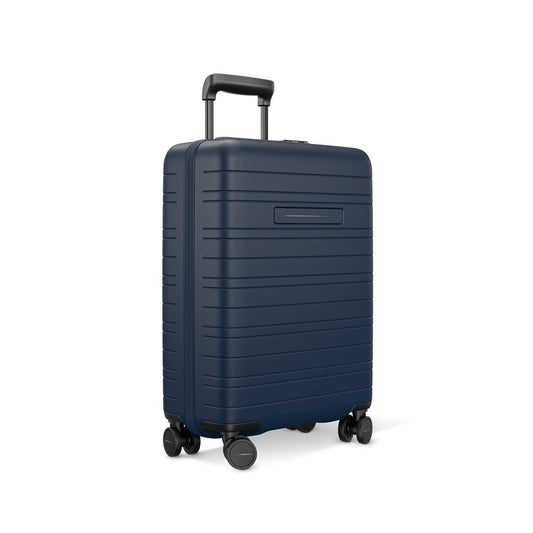
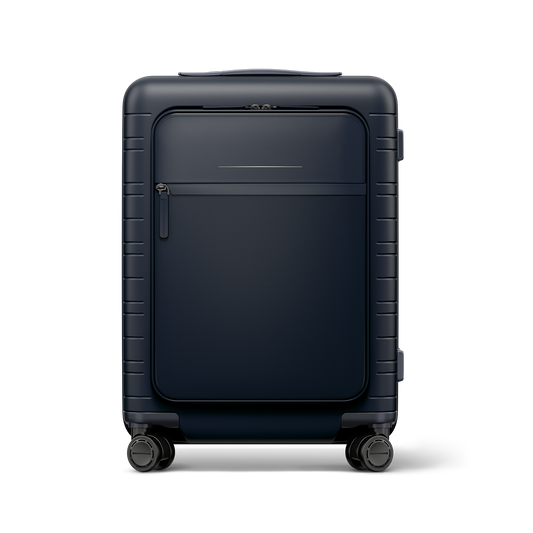
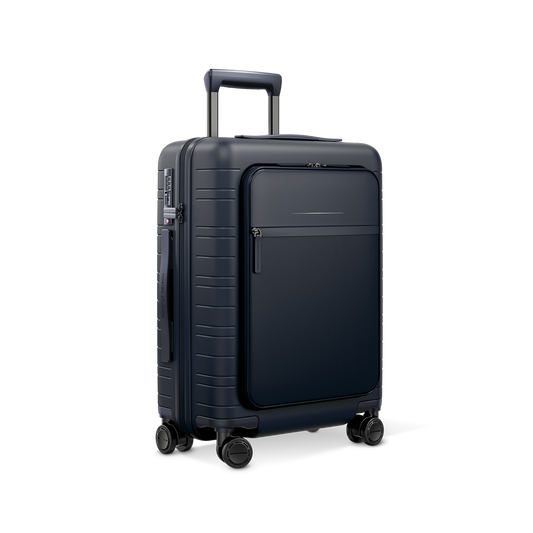
In practice this means a 55 × 40 × 20 cm cabin suitcase plus a 22–30 L backpack, with everything you own inside them. The H5 Air is built for exactly this scenario — at 2.1 kg empty, it’s the lightest cabin suitcase in the range, which leaves more allowance for the things you actually need.
The wardrobe: build a capsule, not a holiday
A nomad wardrobe needs to do two things: handle a video call and walk 15,000 steps in the same day. The trick is ruthless restriction by colour and material.
- Choose a two-colour palette. Black or navy as the base, plus one neutral (grey, olive, or stone). Everything mixes with everything.
- Merino, technical synthetics, and wrinkle-resistant blends only. Cotton t-shirts get heavy when wet and look creased after a flight.
- One smart layer that reads on camera. A blazer, a structured shirt, or a fine knit. You only need one.
- Three to five t-shirts, two trousers, one pair of shorts, one workout set, underwear and socks for seven days, two pairs of shoes maximum.
That’s the entire wardrobe. The math works because you’re doing laundry every seven to ten days regardless of where you are. Plan for the wash, not the worst case.
The work kit: treat it like a second wardrobe
Your work setup is the part that actually pays for the trip, so it deserves more thought than most people give it. The non-negotiables:
- Laptop with a sleeve, regardless of how the bag is padded.
- Universal travel adapter with at least two USB-C ports — replaces three regional adapters.
- Compact GaN charger (65W or 100W). Charges laptop and phone from one port.
- Noise-cancelling earbuds or headphones. Cafés are loud. Trains are louder.
- A foldable laptop stand and a separate keyboard if you work more than three hours a day on the road. Your neck will thank you in month two.
- A 10,000+ mAh power bank with USB-C PD. Useful daily, essential when a flight gets diverted.
- Backups for everything that matters: passport scans in cloud storage, an offline password manager, and one secondary card kept separately from your wallet.
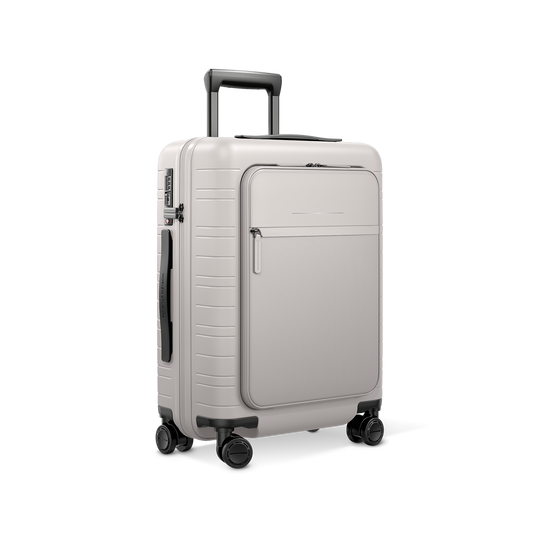
For the bag itself, the M5 Pro and M5 Essential both have a front pocket sized for a 16-inch laptop — useful when you’re pulling the laptop out at security, in a co-working reception, or for an unexpected call from a café.
The two-bag setup
A nomad needs two bags that work as a system: one rolls, one carries. The split matters.
The cabin suitcase carries clothing, shoes, and toiletries — everything that doesn’t need to come out during a workday. Pack it once, open it once a week. The backpack is the active bag: laptop, charger, documents, water, jumper, and whatever you need on the move.
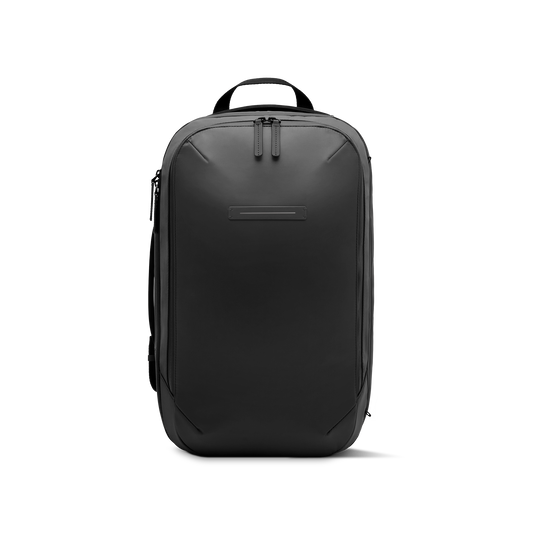
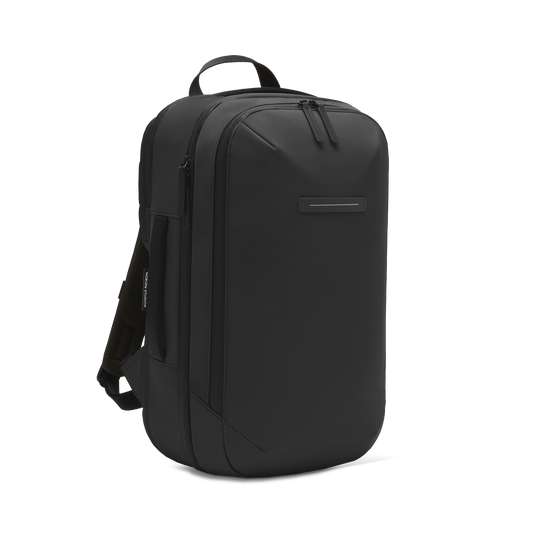
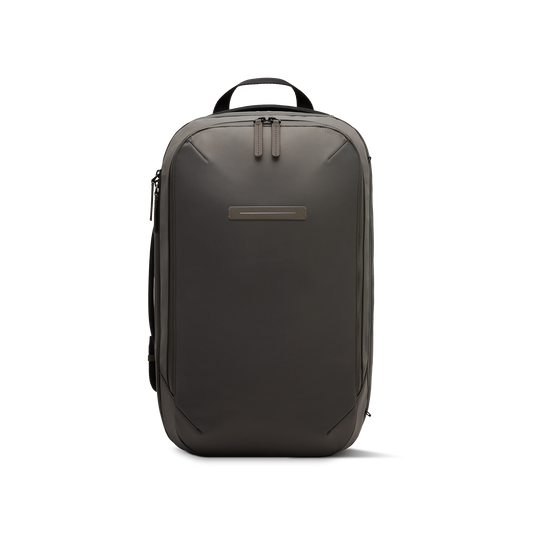
For the backpack, the choice depends on how you work. The Gion Backpack Travel opens like a suitcase and holds 30 L — useful for nomads who shift cities every week and want a bag that packs like luggage but carries like a backpack. The Gion Backpack Pro is the lighter daily option at 750 g and 23 L: enough for laptop, charger, water bottle, and a day’s essentials, without the bulk of a travel pack.
Toiletries and the liquids problem
The 100 ml rule isn’t a hassle once you stop fighting it. Decant everything into reusable silicone bottles, keep them in a transparent zip pouch, and never check the bag. Buy laundry detergent and sunscreen at your destination — they’re cheap, heavy, and sold everywhere.
Documents and admin
Cross-border living means documents matter more than they do for a holiday. Keep digital copies of your passport, visa, vaccination card, travel insurance, and any work contracts in two places: a password manager and an offline folder. A physical copy of your passport in a separate bag from the original has saved more than one trip.
What not to pack
The biggest mistake new nomads make is packing for every possible scenario. You don’t need formal shoes, a third jacket, books in print, or a separate camera unless photography is your work. If you genuinely need it, you can buy it on arrival or order it. Weight saved is mobility gained.
The system in one sentence
A capsule wardrobe in two colours, a serious work kit, two bags that fit the cabin, and the discipline to do laundry weekly. That’s the whole thing. Once it’s dialled in, packing for the next city takes fifteen minutes and you stop thinking about it — which is the point. The bag should be the part of your life that requires the least attention, so the work and the place can have the most.