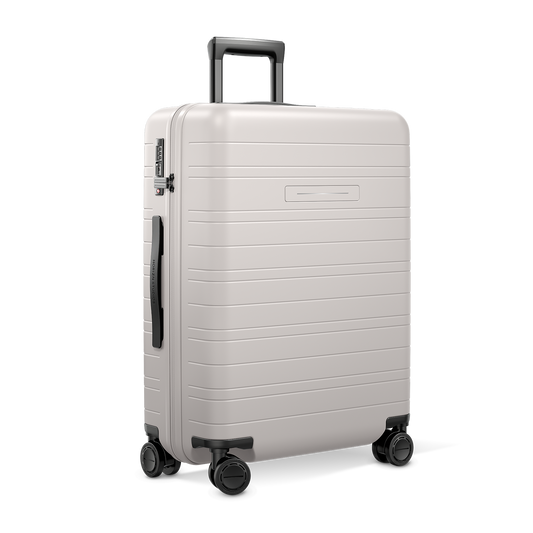
There is a particular kind of calm that frequent travellers carry through airports. It looks effortless from the outside, but it is built from a hundred small decisions made once and never made again. The route from kerb to gate, the order things go into the bag, what gets worn on the plane, when the laptop comes out, when it goes away. None of it is glamorous. All of it is a routine.
People who fly thirty, fifty, a hundred times a year do not move through airports faster because they are anxious. They move faster because they have removed almost every decision from the process. Below is what those routines tend to share — collected from frequent flyers, business travellers, and the kind of people who treat Heathrow Terminal 5 like a second hallway.
The night before is where the trip is won
Frequent travellers do not pack on the morning of a flight. The bag is packed the night before, fully closed, sitting by the door. Anything that needs charging is on charge. Anything that needs printing is printed. The outfit for travel day is laid out — usually a layered, neutral combination that handles a 22°C airport, a 14°C plane, and an unknown destination temperature.
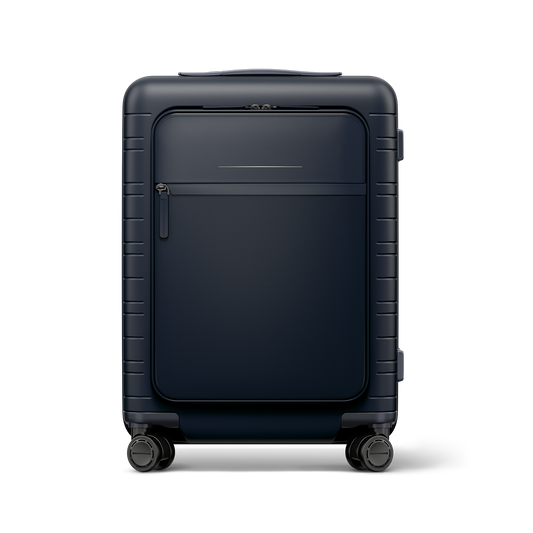
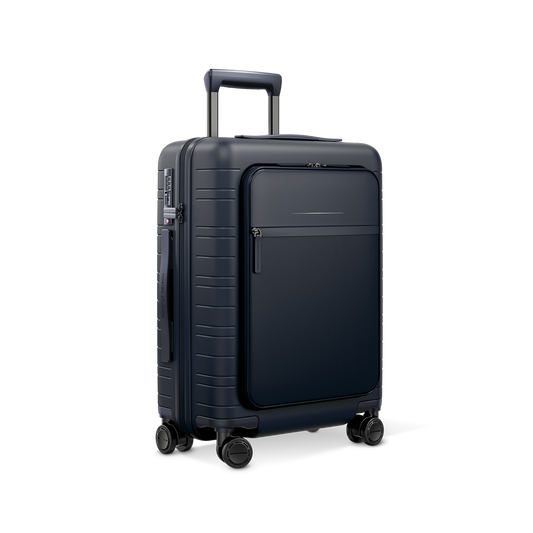
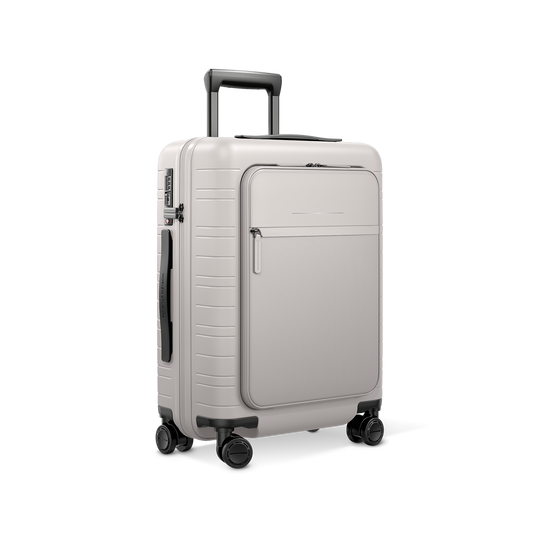
The cabin suitcase lives ready. For people who fly weekly, the M5 Pro tends to stay perpetually half-packed: toiletries decanted into 100 ml bottles in a clear pouch, chargers in their own zip case, a spare pair of socks that never comes out. The trip’s clothing goes in last, on top, in five minutes. The compression pad does the rest.
The kerb-to-gate sequence
There is a rhythm to airport movement that every frequent traveller eventually finds. It looks like this: phone out before the kerb, boarding pass in the wallet of the case, jacket already off, laptop in an outer pocket so it does not need digging for, liquids accessible without unpacking. The aim is to arrive at security and not unpack a thing — at most, lift out the laptop and the liquids pouch in one motion.
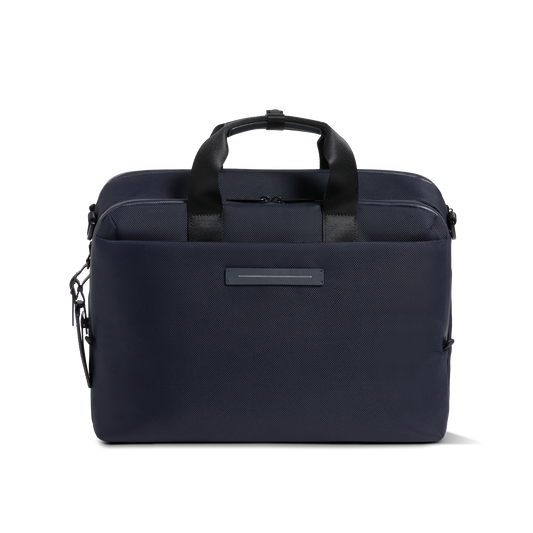
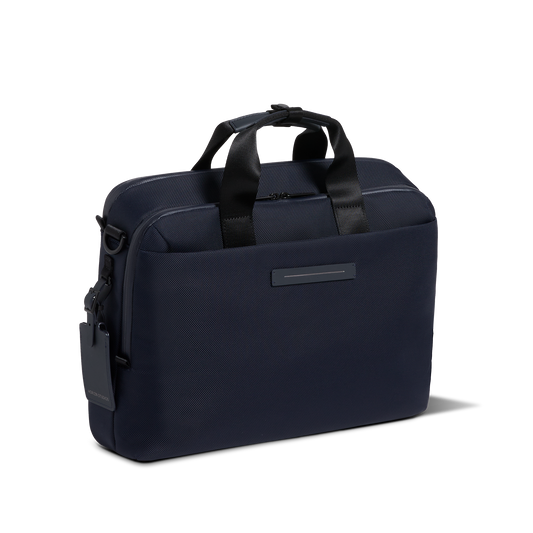
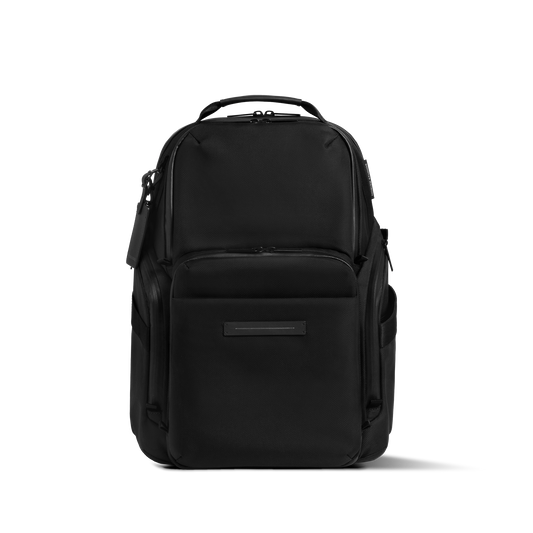
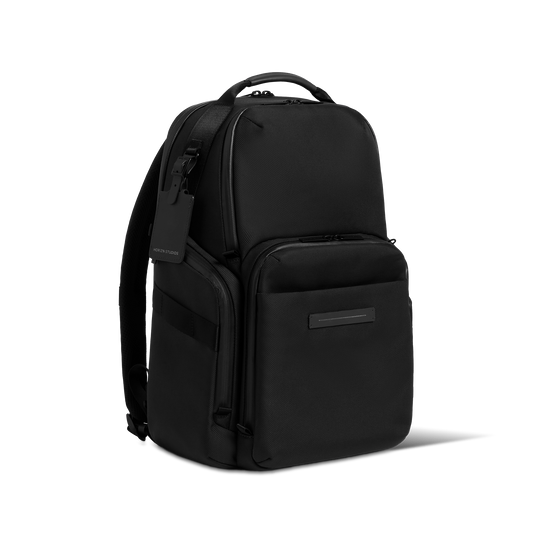
A briefcase or backpack with a dedicated front compartment is what makes that possible. The Midtown Briefcase is built for it: the laptop sits in a padded sleeve that opens flat for the security tray, and the front pocket holds the small things that move in and out a dozen times a day — passport, headphones, hand sanitiser, the boarding pass that ended up printed for some reason. The Midtown Backpack is the equivalent for travellers who prefer two straps.
What gets worn versus what gets packed
Frequent flyers wear their bulkiest items rather than packing them. The jacket goes on, not in. The heaviest shoes go on the feet, not in the suitcase. A scarf doubles as a blanket. The watch and the headphones never go in checked anything, ever — they live on the body or in a personal item that does not leave the seat.
For the personal item, smaller and structured beats larger and floppy. The Gion Cross-Body Bag S is what frequent flyers gravitate towards: phone, wallet, passport, earbuds, hand cream, lip balm. It rides on the shoulder through security and slides under the seat without negotiation. For longer flights, the SoFo Vertical Tote has just enough room to add a paperback, a notebook, and a water bottle picked up airside.
On the plane: a working system, not improvisation
The seat-pocket trick is not really a trick — it is a habit. As soon as the bag goes overhead, three things come out and go into the seat pocket: water, headphones, whatever is being read. Phone goes in the pocket of the jacket on the lap, where it is reachable without waking a sleeping neighbour. Laptop, if it comes out at all, comes out exactly once.
Most frequent travellers have given up on plane productivity beyond the obvious. They do email triage on short flights and one piece of focused work on long ones — never both. The flight is the most reliable hour of focus available to a busy person, and the secret is to use it for one thing.
The arrival routine, which matters more than people think
A frequent traveller’s first thirty minutes after landing are choreographed. Phone out of airplane mode, e-SIM or local network connecting before the jet bridge. Walking pace through immigration — never jogging, never strolling. A pre-decided ground transport choice that does not require browsing apps with a tired brain. A bottle of water at the first opportunity.
The hotel routine is even more practised. Bag goes on the rack, not the bed. Toiletries come out, line up by the sink. Travel outfit hangs to air. Charger in the most accessible socket. The room is set up the same way every time, in every city, so that the brain can register “arrived” and move on to the actual reason for being there.
The longer-trip variation
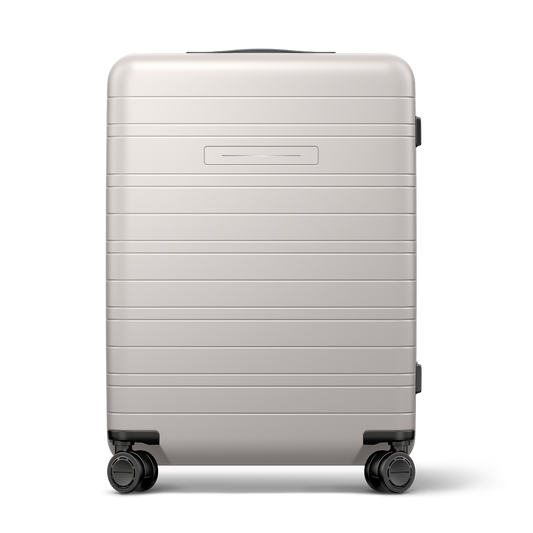
For trips of a week or more, the routine extends rather than changes. The H6 Pro replaces the cabin bag for travellers who would rather check one well-built suitcase than fight cabin space on a tight connection. The compression pad earns its keep on a seven-day trip more than on a two-day one. Everything else stays the same — the sequence, the personal item, the seat-pocket habits, the arrival choreography.
The point of the routine is not the routine itself. The point is that travel becomes ordinary. The flight is ordinary. The arrival is ordinary. The day after is ordinary. What is left is the work, the meeting, the city, the dinner — the actual reason any of this is happening.
Frequent traveller FAQ
What do frequent travellers always pack?
A noise-cancelling pair of headphones, a power bank with USB-C PD, a universal travel adapter, a refillable water bottle, decanted toiletries in 100 ml bottles, one merino layer, and a compact pouch of medications and supplements. These items live permanently in the bag rather than being packed for each trip.
How do frequent flyers stay productive on planes?
They pick one task per flight rather than trying to do everything. Short flights are used for email triage and admin. Long flights are reserved for one piece of focused work — writing, reading, or strategic thinking — followed by sleep. Trying to do both never works.
What is the most efficient cabin bag setup?
A 55 × 40 × 20 cm hard-shell cabin suitcase paired with a structured personal item that fits under the seat. The cabin suitcase carries clothing and toiletries. The personal item carries the laptop, documents, and anything needed during the flight. Splitting items between the two means nothing important ever goes overhead.
Do frequent travellers check luggage?
Rarely on short trips, often on trips longer than a week. The decision usually comes down to connection time and trip length. A tight connection makes carry-on essential. A two-week trip with stable hotel arrangements makes a checked bag worthwhile.
What do frequent travellers wear on flights?
Layered, neutral, comfortable, and presentable enough to walk into a meeting from baggage claim. Typically a merino t-shirt, a structured overshirt or fine knit, dark trousers, and slip-on shoes that come off easily at security. The heaviest jacket is worn rather than packed.