The case for packing light is specific, not philosophical. On a Ryanair or Wizz Air basic fare, a bag that exceeds the free cabin allowance incurs a gate fee. On the Paris Métro or the stairs of Amsterdam Centraal, a heavy bag is a physical problem, not a minor inconvenience. In a compact hotel room in central Berlin or Lisbon, a large case that needs to be fully opened to access anything makes a thirty-minute turnaround into a twenty-minute unpacking exercise. The benefits of lighter packing are not abstract — they accumulate across every transit point in a trip.
Radical Storage data shows that 71.7% of travellers report having overpacked, and 40% return with clothes they never wore. That is not a discipline problem. It is a system problem. Most overpacking happens before the bag is open — in the decision stage, when each item is assessed individually rather than as part of a finite whole. The fix is a framework applied before anything goes in, not willpower applied while standing over an overfull case.
The foundation: volume before clothing
The first decision in minimalist packing is the bag, not the wardrobe. Volume sets the constraint that every other decision has to fit within. Choose the bag for the trip length and let that choice do the editing work.
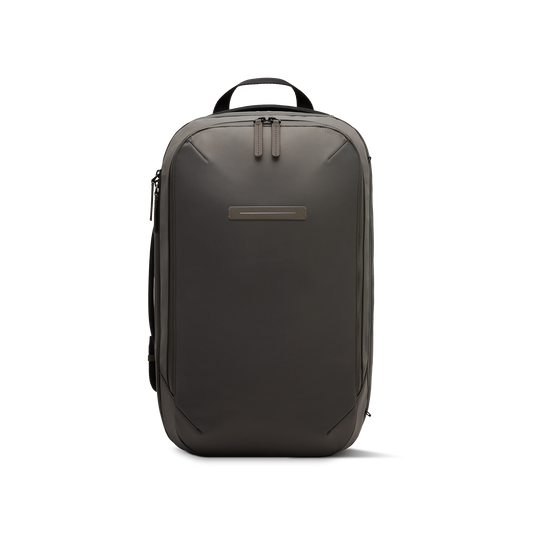
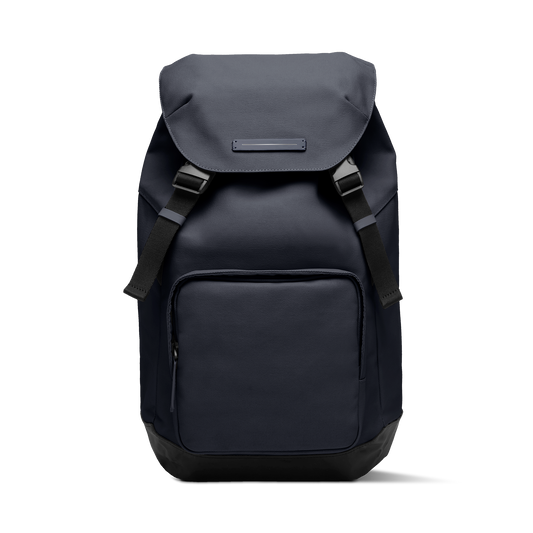
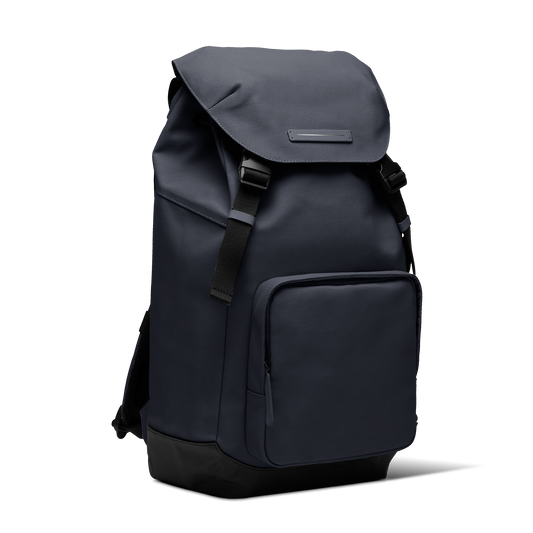
For one to three nights, a 23–30L backpack is the right ceiling. The Gion Backpack Pro (23L, 750 g, recycled nylon) carries a 16" laptop, a change of clothes, and a compact toiletry kit — everything needed for a two-night city trip — without exceeding the personal item allowance on most European carriers. The SoFo Backpack City (23–26L expandable, 1.15 kg) adds a structured front pocket and a waterproof base for trips where the bag needs to handle varied weather or work time.
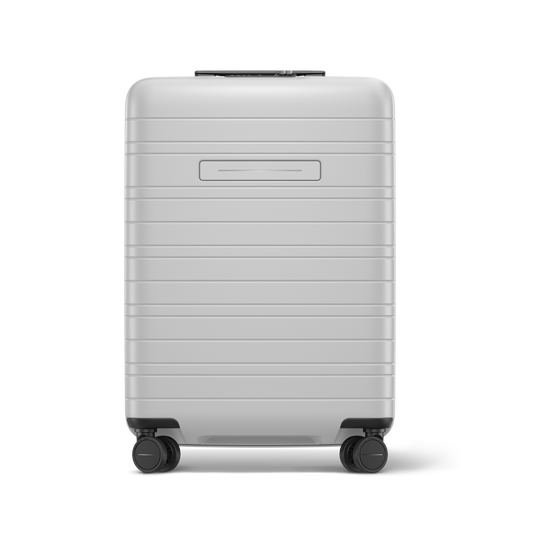
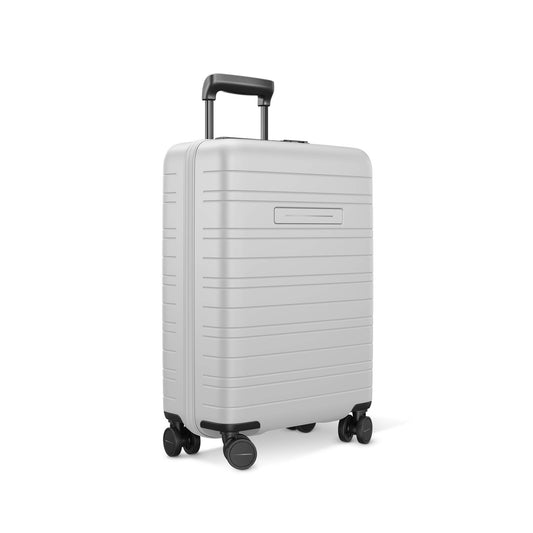
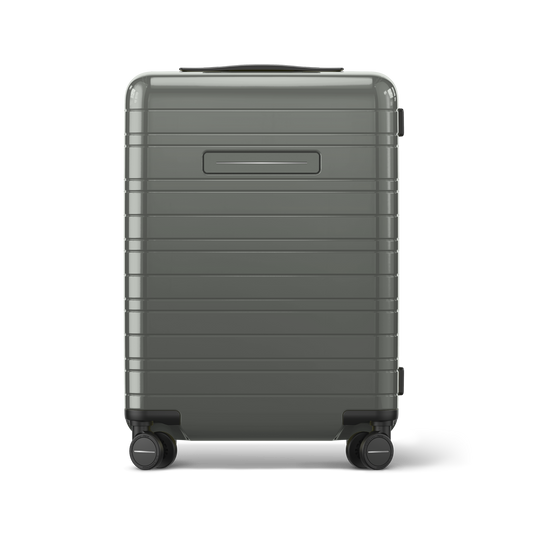
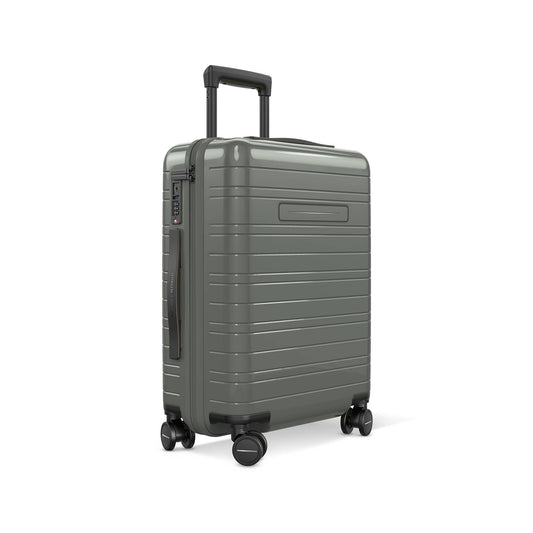
For three to five nights, the H5 Essential (36L, 2.9 kg, 55 × 40 × 20 cm) or H5 Air (33L, 2.1 kg, 55 × 37 × 20 cm) sets a hard ceiling at carry-on size. The volume is generous enough for a week of considered packing; the cabin format means no checked baggage, no waiting, no mishandling risk. For travellers on weight-sensitive routes — Ryanair, Eurowings, Wizz Air — the H5 Air at 2.1 kg empty provides the most usable packing capacity within a 10 kg combined allowance.
For five to seven nights of genuinely minimal packing, the Gion Backpack Travel (30L, recycled nylon, suitcase-style panel opening) is a useful intermediate. It opens flat like a case, packs like a backpack, and fits in the overhead bin on most European carriers. The panel opening makes it easier to pack and access than a top-loading backpack, and the 30L volume is a genuine constraint that forces the kind of editing that improves with practice.
The wardrobe formula
The clothing formula for minimalist travel is not a number of outfits — it is a relationship between pieces. Every item has to work with at least two others in the bag. A piece that only works with one specific combination is a contingency item, not a versatile one, and contingency items are how bags get heavy.
A practical formula for five days: one outer layer (a structured overshirt, a light jacket, or a blazer that moves between contexts), two bottoms (one more tailored, one more relaxed), four tops in a tight colour palette, one pair of shoes worn in transit, underwear and socks for each day, and one optional upgrade for an evening plan. That covers the full range of a short trip — office, city, dinner — without repetition and without dead weight.
Neutral colours do the structural work. Black, navy, grey, and off-white mix without effort and make repeat wears look considered rather than repeated. A dark pair of trousers worn three times across five days reads differently each time when the top changes. The capsule wardrobe principle applied to travel packing is not about restriction — it is about making every piece earn multiple appearances.
Fabric choices that make minimalism work
The wardrobe formula breaks down if the fabrics are wrong. A linen shirt wrinkles in transit and arrives looking like it has been slept in. A thick cotton knit takes up a third of the available volume and dries slowly if washed. Minimalist packing requires fabrics that travel: merino wool, performance polyester, wrinkle-resistant cotton blends, and mid-weight jersey.
Merino wool is the most useful travel fabric across almost every category. It is odour-resistant, which means a merino top can be worn two or three times between washes without becoming unwearable. It regulates temperature across a wider range than cotton — comfortable in an air-conditioned office and on an evening walk through a warm city. It wrinkles minimally and recovers quickly when hung. The weight is higher than synthetic fabrics at equivalent warmth, but the reduced number of pieces required more than compensates.
Performance polyester and nylon are the right choice for workout gear, base layers, and anything that needs to dry overnight. They are lighter than merino, pack smaller, and handle machine washing or sink washing without issue. The limitation is odour retention — performance synthetics hold smell more readily than merino — so they are better suited to active-use pieces than everyday wear.
Wrinkle-resistant cotton blends are the practical middle ground for shirts and trousers that need to look presentable. A shirt in a cotton-polyester or cotton-modal blend holds its shape through transit and can be worn straight from the bag without pressing. The pure cotton alternative requires either packing carefully (using a dry-cleaning bag and folding along seams) or finding an iron, which is not always available and always takes time.
The packing cube system
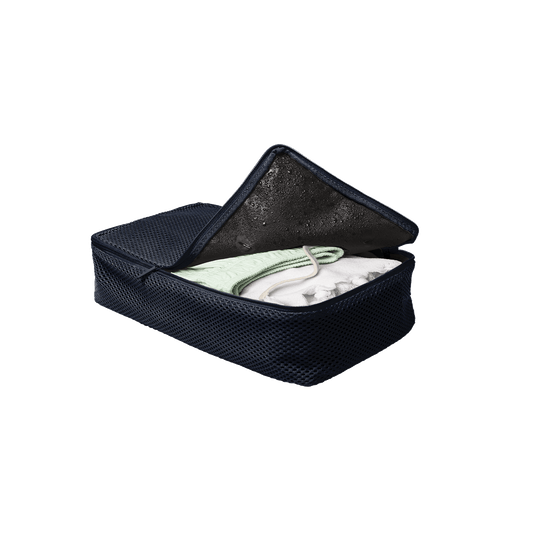
Packing cubes are the structural component that makes minimalist packing repeatable rather than effortful. Without them, a well-edited wardrobe still requires sorting at every hotel. With them, the interior of the bag is fixed before departure and does not change between destinations.
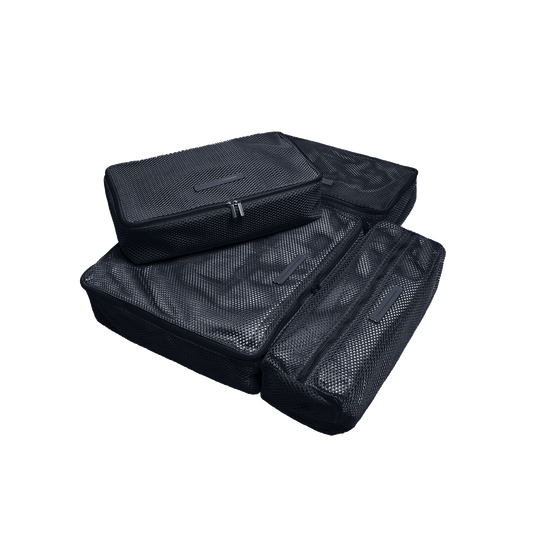
The Horizn packing cube set of four sizes creates a zoned interior: one cube for tops, one for bottoms and heavier layers, one for underwear and socks, one for cables, adapters, and small accessories. Every item has a fixed address in the bag. At a hotel in Amsterdam or a rental in Lisbon, the cubes come out and go into the wardrobe. At departure, they go back in. Nothing has to be refound, re-sorted, or repacked from scratch.
The secondary function of packing cubes in minimalist packing is compression. A cube filled with four tops occupies less volume than the same four tops folded loosely — the structured walls of the cube compress the clothing as it is zipped closed. In the Pro series cases, this combines with the built-in compression pad: the pad presses down on the cubes, holding everything flat against the base and reducing the total volume further. The two systems reinforce each other.
The toiletry edit
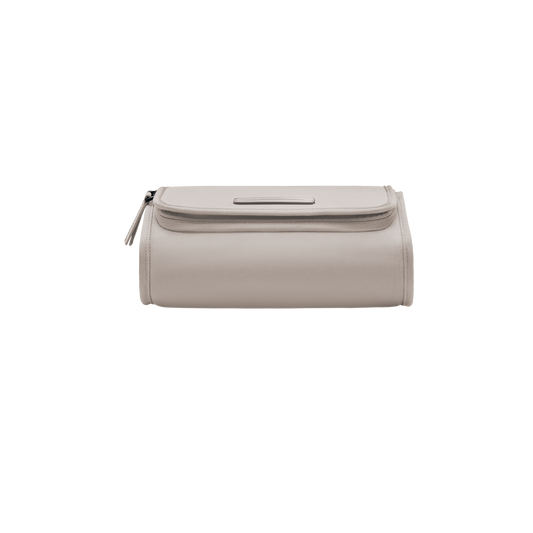
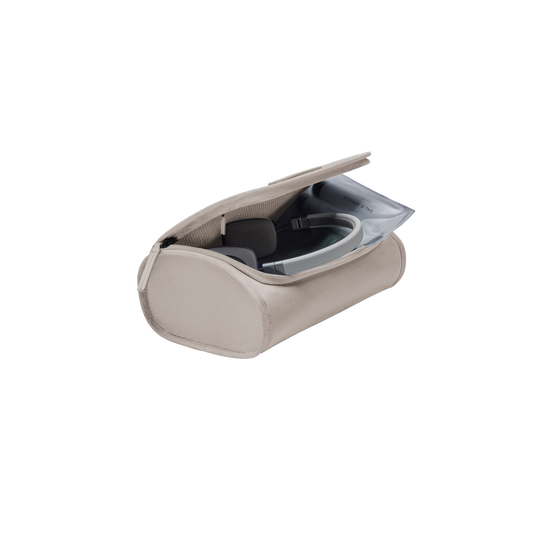
Toiletries are where minimalist packing most often fails — not from bad intentions but from inertia. The full-size shampoo that is 80% full, the moisturiser that is coming anyway, the backup razor in case the first one breaks. Each item feels like a small addition. Collectively they fill a toiletry bag that takes up the volume of a rolled jumper.
The working principle is simple: every liquid must earn the 100 ml cabin limit individually. If it is not used every day, it does not travel. Solid alternatives — shampoo bars, solid moisturiser, conditioner bars — remove the liquid allowance pressure entirely and are now available in quality formulations that work as well as their bottled equivalents. A one-week trip requires very little that cannot be replaced at a pharmacy near the destination if genuinely needed.
The other edit is hotel provision. Most hotels above budget level provide shampoo, conditioner, body wash, and a hairdryer. Packing these items anyway is insuring against a scenario that almost never occurs. The toiletry bag should contain what the hotel definitely will not provide: a specific medication, a contact lens routine, a skincare product that is not a commodity, a specific razor system. Everything else is either provided or available nearby.
Tech and cables: the category most people overpack
The standard tech overpack is a laptop, a tablet, an e-reader, a dedicated camera, multiple charging cables, two power banks, a travel router, and noise-cancelling headphones — all for a four-night city trip where the phone does 90% of the work. The edit that minimalist packing requires here is not technical; it is honest. What will actually be used, versus what is brought because it might be useful?
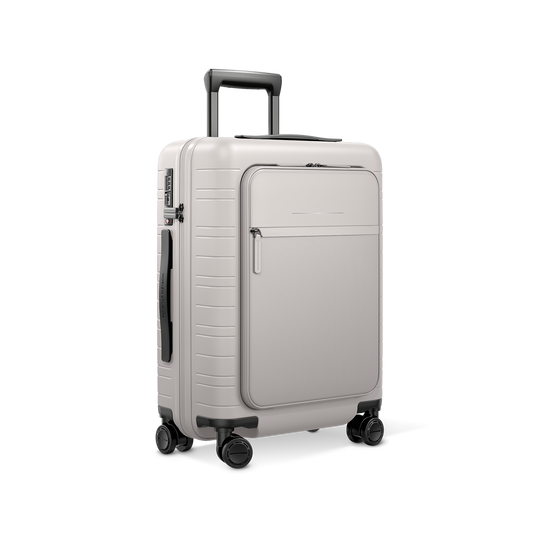
For most short trips, the working setup is: phone, one compact wall charger (multi-port if possible), one power bank within the 100 Wh cabin limit, one cable that handles the devices in the bag, and earbuds. A universal adapter if the trip crosses a plug border. A laptop only if the trip includes genuine work time — not just "I might answer some emails." That setup fits in the front pocket of the M5 Pro or M5 Essential without touching the clothing compartment, or in the laptop compartment of the Gion Backpack Pro with room for a notebook and a charger alongside it.
The one-bag question
One-bag travel — a single carry-on that is both the clothing case and the personal item — is achievable for most short trips if the volume ceiling is set correctly and the wardrobe formula is applied. A 30–36L cabin case holds five days of considered packing, a compact toiletry kit, and basic tech. The personal item allowance that most airlines permit alongside the cabin case can then carry the laptop, documents, and daily essentials separately — effectively doubling the total cabin capacity without crossing into checked luggage territory.
The split that works: the cabin case handles clothing, the personal item handles the working day. The H5 Essential or H5 Pro as the primary case, paired with the Gion Backpack Pro as the personal item. Or the H5 Air on weight-sensitive routes, where the 800 g saving over the H5 Pro translates into measurable extra packing capacity.
What minimalist packing is not
Minimalist packing is not extreme minimalism. It is not a competition to see how few items can board a plane. It is not about discomfort, about wearing the same outfit twice in the same meeting, or about arriving anywhere without what is actually needed. The distinction matters because the most common reason people resist lighter packing is the association with deprivation — the assumption that packing less means arriving with less.
The actual outcome of well-executed minimalist packing is the opposite of deprivation. A bag that weighs 6 kg instead of 14 kg moves through Frankfurt Airport in a fraction of the time. A case that fits overhead on every carrier eliminates the single most stressful variable in European air travel. A wardrobe where every piece works across multiple contexts means arriving anywhere with more options than a bag twice the size that contains items that only work in one specific combination.
The system takes two or three trips to become automatic. After that, it is faster to pack than the alternative — and faster, calmer, and cheaper to travel with the result.
Frequently asked questions
What is minimalist packing?
Minimalist packing is a system for travelling with only what earns its place in the bag — no contingency items, no just-in-case duplicates, no pieces that only work in one specific combination. It is not about deprivation. A well-executed minimalist pack for five days typically weighs 5–8 kg and covers a full range of contexts without dead weight.
How do I pack light for a week?
Apply the formula before opening the bag: one outer layer, two bottoms, four tops in a neutral palette, underwear and socks for each day, one pair of shoes. Every piece must work with at least two others. Use merino wool or wrinkle-resistant blends for fabrics that travel well. Packing cubes fix the interior layout and eliminate the resorting problem between destinations. A 33–36L cabin case handles this volume comfortably.
Can I really do one-bag travel for a full week?
Yes, for most trips. A 36L cabin case with a tight wardrobe formula, a compact toiletry kit, and basic tech fits five to seven days of considered packing. Pair it with a backpack or briefcase as the personal item for laptop and daily essentials. The total cabin capacity across both bags covers most week-long trips without checking anything.
What is the best bag for minimalist travel?
It depends on trip length and travel style. For one to three nights: the Gion Backpack Pro (23L) or SoFo Backpack City (23–26L expandable). For three to five nights cabin-only: the H5 Essential (36L) or H5 Air (33L, 2.1 kg — the better choice on weight-sensitive routes). For a flexible one-bag setup that packs like a case: the Gion Backpack Travel (30L, panel-loading). For business travel specifically, the M5 Pro or M5 Essential adds a front pocket for laptop access without opening the main compartment.
Do packing cubes actually help with minimalist packing?
Yes — and specifically for the repeatability problem. Without cubes, a well-edited wardrobe still requires sorting at every hotel. With cubes, the interior of the bag is fixed before departure and stays fixed between destinations. The Horizn set of four covers tops, bottoms, underwear and socks, and accessories — a complete zone system that makes packing and unpacking a single motion rather than a decision.
What fabrics work best for minimalist packing?
Merino wool for tops and mid-layers — odour-resistant, temperature-regulating, wrinkle-resistant, and wearable multiple times between washes. Wrinkle-resistant cotton blends for shirts and trousers that need to look presentable. Performance polyester or nylon for workout gear and anything that needs to dry overnight. Avoid linen (wrinkles badly), thick cotton (too heavy), and anything that only works with one other item in the bag.
How many clothes should I pack for 5 days?
One outer layer, two bottoms, four tops, underwear and socks for each day, and one pair of shoes covers five days without running out of options. That is nine main pieces plus underwear and socks — comfortably within a 36L cabin case alongside a compact toiletry kit and basic tech. The key is a tight colour palette so every piece works with every other piece.
What should I not pack for a short trip?
Contingency items: the outfit for an event that has not been confirmed, the pair of shoes that only works with one other item, the backup device that will not be used, the full-size toiletries when 100 ml versions exist or the hotel provides them. Apply one filter: does this item work across at least two different contexts or outfits? If not, it stays home.
Is carry-on only travel practical across European airlines in 2026?
Yes, for most fare classes on most carriers. The H5 Essential and H5 Air both sit at 55 × 40 × 20 cm — within standard allowances on Lufthansa, Swiss, Eurowings, EasyJet, Air France, and British Airways. Ryanair without Priority boarding limits the free bag to 40 × 20 × 25 cm; Priority or a Plus fare is needed for the larger cabin case.
Does minimalist packing work for business travel?
It is the format most business travel is suited to. A five-day business trip fits comfortably in a 36–37L cabin case with a disciplined wardrobe — one blazer, two trousers, four tops, minimal shoes. The M5 Pro or M5 Essential adds the front-pocket laptop access that separates a business-optimised cabin case from a standard one. The Pro series compression pad keeps clothing flat for the full trip.


 Essential+2