There is a particular look people develop after they have travelled enough. It is harder to describe than to recognise: a slightly muted palette, fabrics that hold their shape after a flight, shoes that walk a city without complaint, layers that handle four climates in a day. It does not look like vacation clothing. It looks like the wardrobe of someone for whom moving through the world is ordinary.
A travel style guide, properly understood, is not advice on what to wear in Paris versus what to wear in Tokyo. It is advice on how to build a small, considered wardrobe that handles both. The destination matters less than people think. What matters is the journey, the climate range, the unwritten dress codes you will pass through, and the question of how little you can carry while still looking like yourself when you arrive.
The principle: dress for the journey, not the destination
The mistake most travellers make is packing for fantasy versions of where they are going. The Paris trip gets the trench coat that is too warm for September. The Tokyo trip gets the dress that needs heels and an outer layer no one packed. The Milan trip gets one outfit too many because it might be needed for an aperitivo that never happens. None of these clothes are wrong in themselves. They are wrong for travel, where they sit in a suitcase being heavy.
Travel style begins by asking a different question: what does this wardrobe need to do, in this volume of bag, across these days, in temperatures between X and Y? The answer is almost always smaller and quieter than instinct suggests. The destination provides one or two specific cues — a museum opening, a particular dinner — and the rest of the wardrobe carries the journey.
The capsule wardrobe argument
A travel capsule wardrobe is not a hashtag. It is the practical conclusion that follows once you take the journey seriously. A capsule means a small set of pieces in a coherent palette where everything works with everything else. For a week of travel, eight to twelve pieces is enough. For a long weekend, six. The arithmetic of combinations does the heavy lifting: ten pieces in a coherent palette will give more outfits than fifteen pieces that do not match.
The components are simple and transferable. Two pairs of trousers in different weights. Three to five tops, mostly in the base palette, one or two with subtle interest. One outer layer for warmth, one for weather. One smarter piece — a fine knit, a structured shirt, a tailored blazer — that lifts a basic outfit into something that reads on a Wednesday-night dinner. Two pairs of shoes, both wearable for full days. Underwear and socks for the trip plus two days, because laundry is a tool not a worry.
Materials that travel
Some fabrics travel and some do not. Merino wool travels brilliantly: warm when cold, cool when warm, slow to wrinkle, slower still to smell. Technical synthetics in the Uniqlo or Lululemon register travel well. Wool blends and structured cotton hold their shape. Linen, despite the romance, wrinkles inside a folded suitcase and never quite recovers. Pure cotton t-shirts get heavy when wet and soft when packed — fine for casual trips, less fine for anything that needs to look composed.
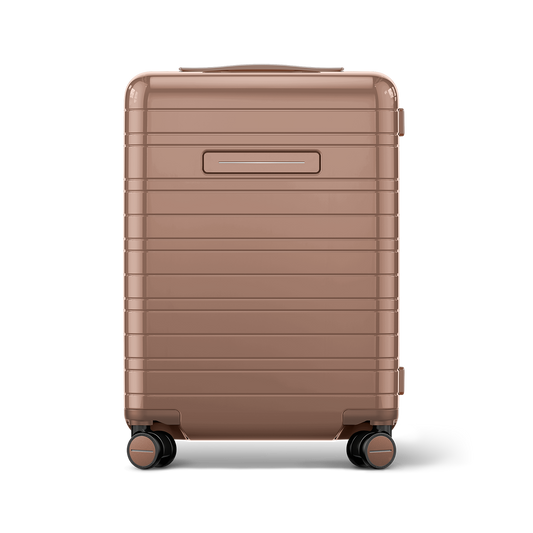
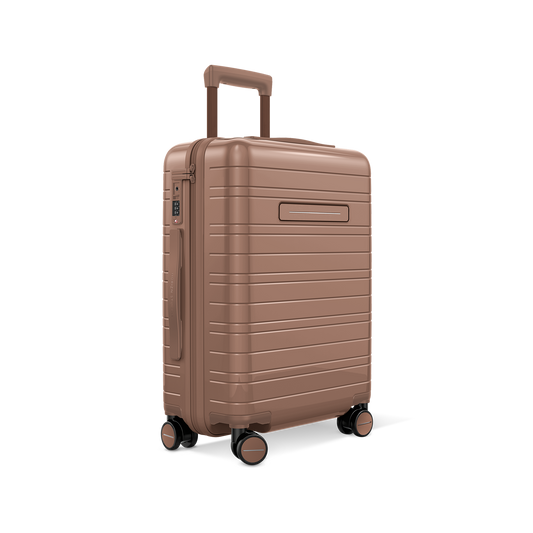
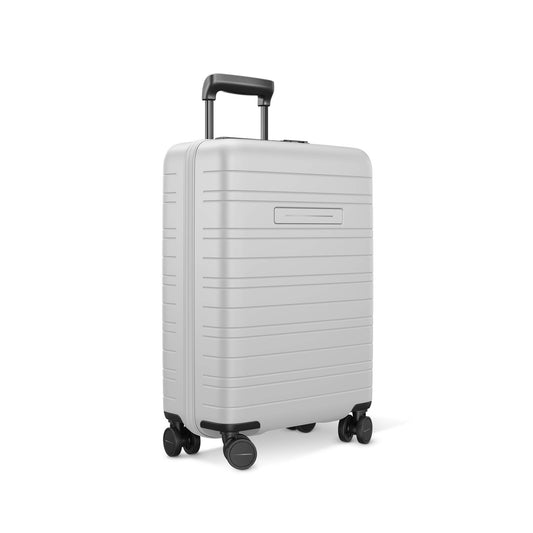
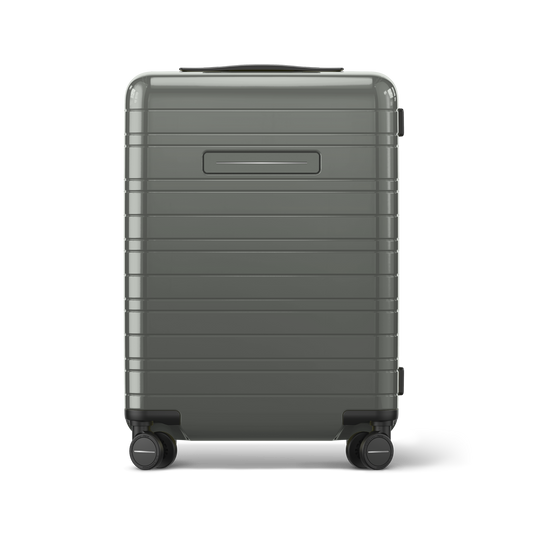
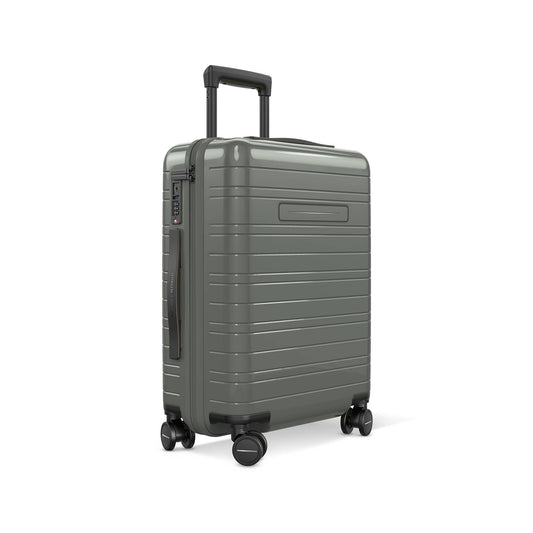
The same logic applies to bags. The H5 Essential is the workhorse case for a coherent capsule wardrobe — a clean cabin shell that does not compete with the clothes inside it, with dual mesh dividers that hold a folded merino layer as well as they hold a structured shirt. For travellers who want the same logic in recycled material, the H5 RE carries it in a 97 per cent recycled polycarbonate shell.
The palette
A travel wardrobe needs a coherent palette more than it needs anything else. Two base colours and one accent is the formula that works almost universally. The base colours are usually black, dark slate, navy, or stone. The accent is something the wearer already gravitates towards — olive, oxblood, a particular blue, ivory.
When everything is in a coherent palette, the wardrobe becomes combinatorial. Eight pieces become twenty outfits. The white shirt works with the dark trousers and the black trousers and the olive trousers, and it works under the blazer and under the fine knit and on its own. Add an off-palette piece — a printed shirt, an unusual colour — and combinations start to drop. The maths get worse the more colourful the wardrobe gets.
The transition layer
The most useful piece in any travel wardrobe is the layer between a t-shirt and a coat. Call it an overshirt, a fine knit, a chore jacket, a structured cardigan — the category matters less than the function. It needs to be smart enough to wear into a meeting, warm enough to handle a 14°C plane, and structured enough to survive being shoved into a personal item under the seat. Linen will not do this. Cashmere, on a hot day, also will not. Merino, fine wool, or technical knits will.
A traveller who owns one good transition layer per palette they wear is half-packed for any trip already.
The bag as part of the outfit
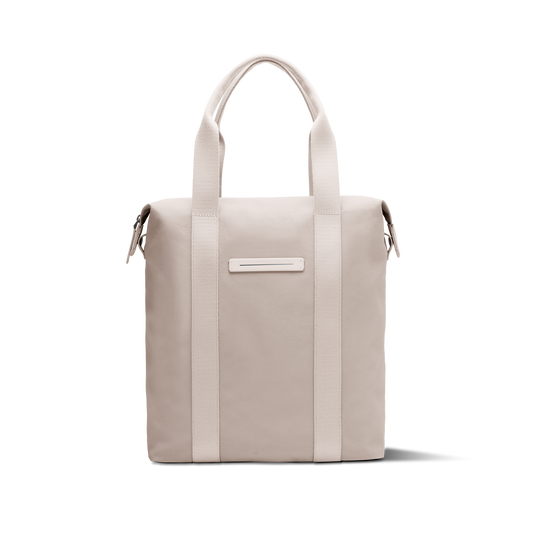
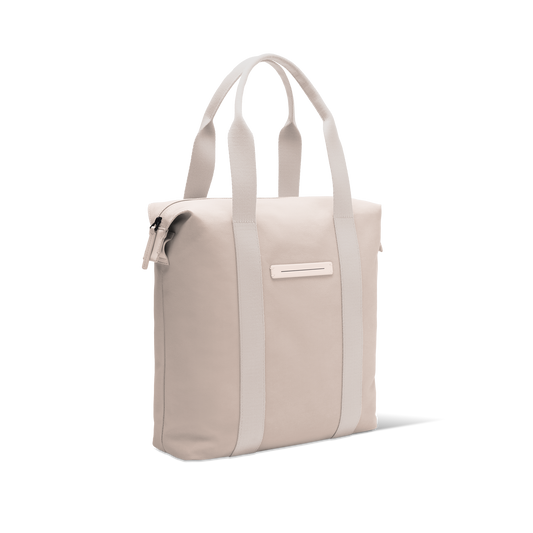
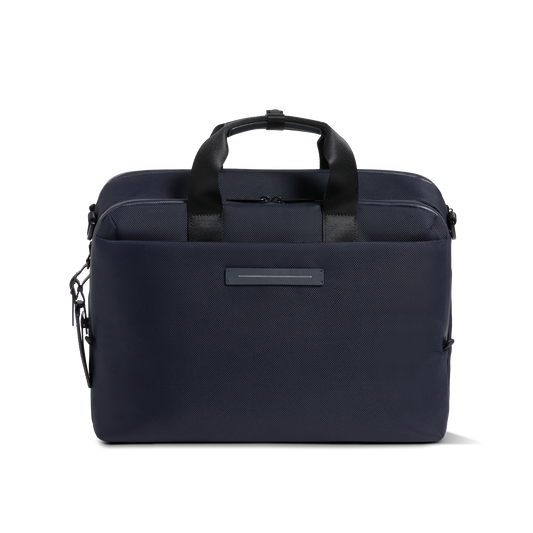
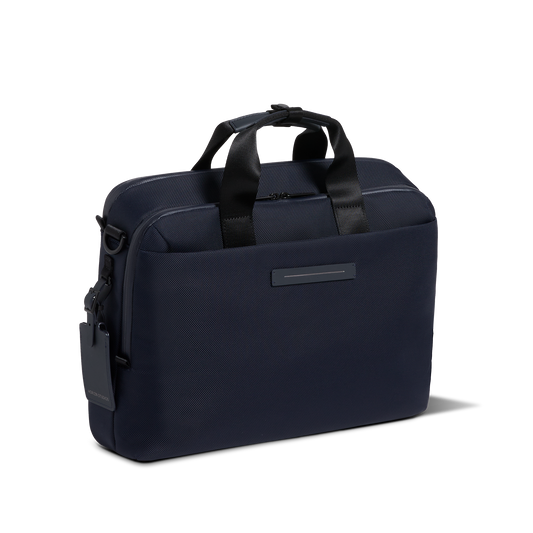
The personal item is the part of the wardrobe people forget is a wardrobe choice. A loud bag undoes a careful outfit. A small, well-made one extends it. The SoFo Vertical Tote in waxed canvas is the bag for a traveller whose outfit ends in fine knit and dark trousers — it reads quietly, takes a paperback and a notebook, and rides on the shoulder without insisting on attention. The Midtown Briefcase in ballistic nylon is the same idea in a more business register.
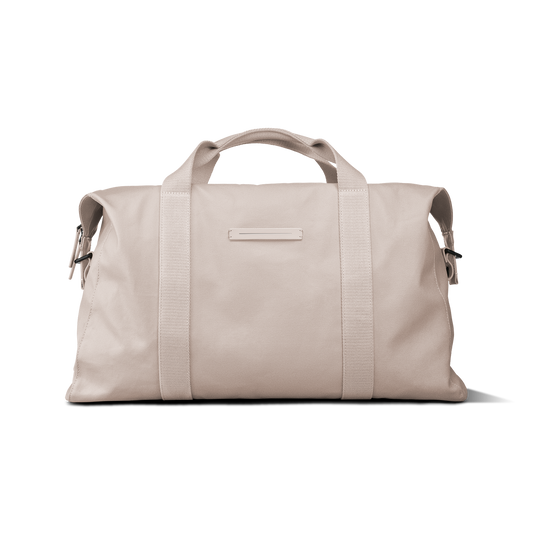
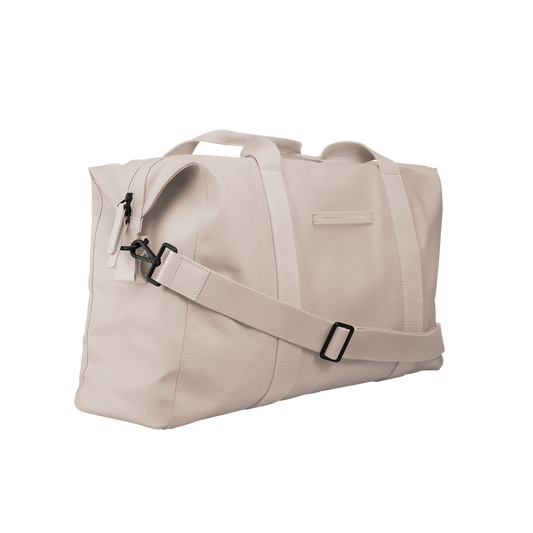
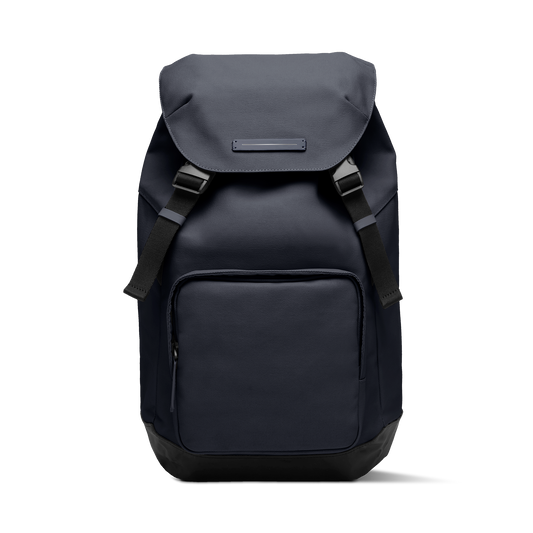
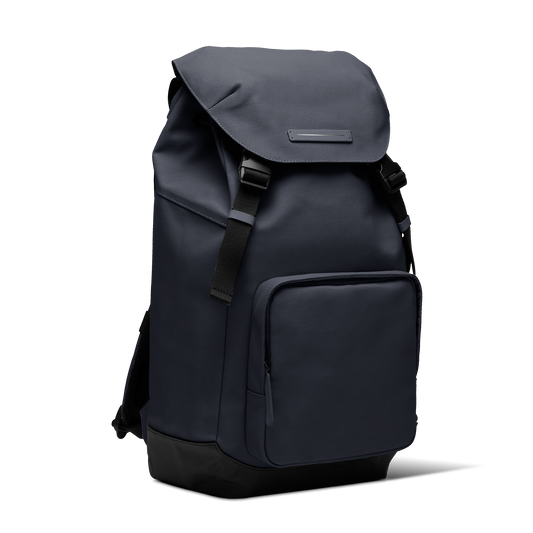
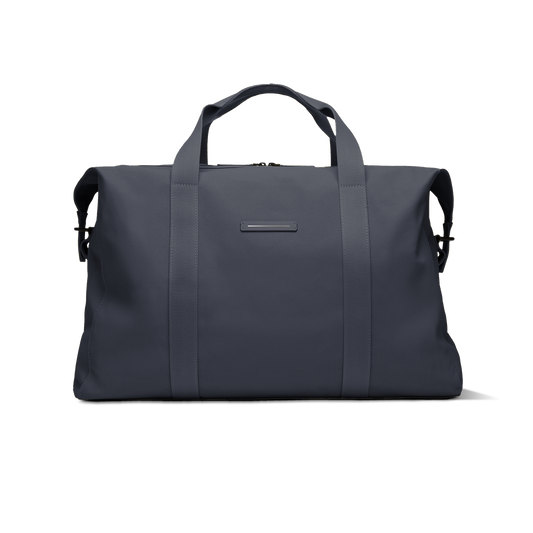
For the bag that absorbs the in-between days — the city walk, the museum afternoon, the friend’s flat-warming — the SoFo Backpack City carries enough without ever looking like an airport object. And for the weekend that needs softer luggage, the SoFo Weekender M and SoFo Weekender L carry the same waxed canvas language at 32 and 40 litres respectively, dressing the trip down without dressing it cheap.
What to wear on a plane
The travel-day outfit is the most overworked decision in a journey. It does not deserve the time most people give it. The brief is simple: layered, neutral, comfortable enough for ten hours seated, presentable enough to walk into a hotel reception or a meeting from baggage claim. A merino t-shirt or fine knit, dark trousers in a fabric with some give, slip-on shoes that come off easily at security, and the heaviest jacket worn rather than packed. A scarf or wrap that doubles as a blanket. That is the outfit for any flight, anywhere, year-round, with seasonal adjustments to weight rather than category.
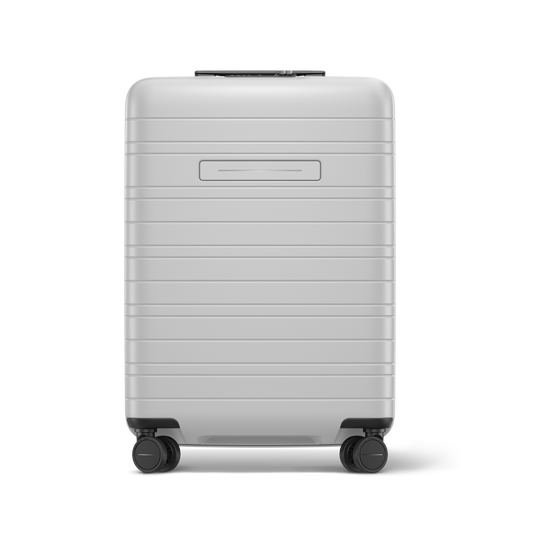
For carry-on, the same restraint serves the case. The H5 Air is the cabin suitcase for travellers who want the smallest possible weight tax on their wardrobe — at 2.1 kg empty, more of the airline allowance is available for the actual capsule.
What this looks like in practice
A week in Lisbon in October, for someone with a meeting on the Tuesday and dinners through the rest. Two trousers — one wool, one cotton. Five tops in black, white, and stone. One fine merino crewneck. One tailored overshirt. One light coat. Slip-on leather shoes and white trainers. Underwear and socks for nine days. A scarf that doubles as a blanket on the plane. The cabin suitcase, plus a structured tote for the day. That is the trip.
The same wardrobe, with the wool trousers swapped for linen-cotton and the coat dropped, becomes a week in Athens in May. The same wardrobe, with a heavier knit added and the trainers swapped for boots, becomes a week in Berlin in November. The destination changes a few pieces. The system stays.
Travel style is not really about clothes. It is about the discipline of choosing once well, and then trusting it.
Travel style and capsule wardrobe FAQ
What is a travel capsule wardrobe?
A small, intentional set of clothes — typically eight to twelve pieces — chosen in a coherent palette so that every item works with every other. It is designed to produce many outfits from few pieces, making travel lighter without sacrificing how the wearer looks or feels.
How many pieces should a travel wardrobe have?
Six to eight for a long weekend; eight to twelve for a week; ten to fourteen for a two-week trip. The number matters less than the coherence: a tighter palette of fewer pieces will outperform a larger wardrobe in mixed colours.
What fabrics travel best?
Merino wool, technical synthetics, wool blends, and structured cotton. They hold their shape, wrinkle slowly, and recover quickly. Linen and pure cotton are less travel-friendly because they wrinkle and lose composure after a folded flight.
What colours work for a travel wardrobe?
Two base colours and one accent. Common bases are black, dark slate, navy, and stone. The accent is a colour the wearer already gravitates towards. A coherent palette multiplies outfits; a scattered palette divides them.
What is the best outfit for a long-haul flight?
A merino t-shirt or fine knit, dark trousers with some give, slip-on shoes that come off easily at security, the heaviest jacket worn rather than packed, and a scarf that doubles as a blanket. Layered, neutral, comfortable enough for ten hours seated, and presentable enough to walk straight into a hotel or meeting on arrival.


 Essential+3