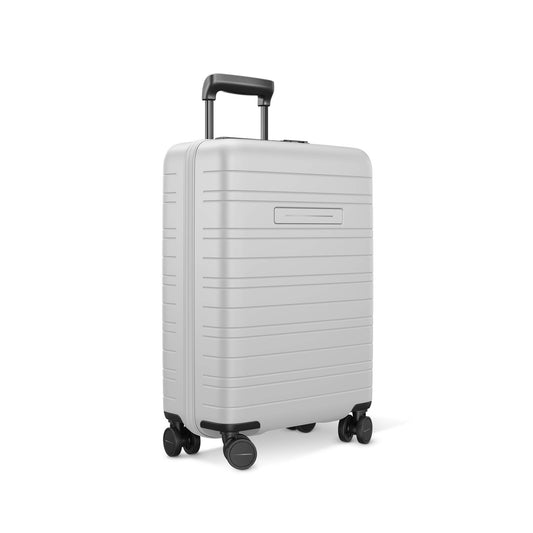
The Friday evening flight from Berlin to Lisbon leaves at seven. Work ends at five. The case is already packed — it has been since Tuesday, because a weekend trip that starts with a last-minute scramble ends with something forgotten. The train to the airport takes forty minutes. Security is ten. By the time the plane starts boarding, the traveller has been at the gate for an hour with a glass of wine, reading. The case sits quietly beside them. It contains what two nights require and nothing more.
This is the weekend trip at its best: compact, resolved, almost unremarkable. The traveller arrives Friday night, has dinner, sleeps well, spends Saturday walking through a city they have chosen to return to, has another dinner, sleeps well again, walks a little more on Sunday morning, and is home by the evening. The bag that made this possible is the entire quiet infrastructure of the trip. Chosen badly, it becomes the thing that everyone is fighting with. Chosen well, it recedes into invisibility.
The weekend is not a short long trip
The most common packing mistake for a two-night trip is treating it as a shrunken version of a longer one. Three shirts instead of five. One extra pair of shoes just in case. A backup jumper. The logic of "a bit less" is the logic that produces a bag that could cover a week, used for a weekend. The result is always the same — a heavy bag, slow transit, a hotel room that takes thirty minutes to unpack, and several items that never come out.
A weekend trip has its own shape. Two nights typically means two full outfits, an evening option, and what you wear to travel in. Three days means three. Neither requires a contingency wardrobe. The weather on Saturday in Lisbon is not going to be dramatically different from the weather on Friday evening, and if it is, most European cities have places to buy a jumper. The gap between "what I will definitely use" and "what I might possibly need" is the gap that produces overpacking — and the weekend is the trip where that gap is narrowest and easiest to close honestly.
The discipline the weekend rewards is specific. One bag. No checked luggage ever. Every item used at least once. Every outfit combinable with at least one other. Shoes: one pair on, none packed. Tech: phone, charger, maybe a book. A toiletry bag that lives pre-packed in a drawer and does not have to be rebuilt before each trip. That setup, honestly maintained, is the difference between the weekend you enjoy and the weekend you spend managing.
Choose the bag before the wardrobe
The bag sets the ceiling. A 23L backpack forces the kind of editing that a 36L cabin case does not. Neither is right or wrong — but the decision between them shapes everything else about the trip. Make it first, with the specific trip in mind, and the wardrobe questions become simple.
The one-bag weekend: 23–30L backpacks
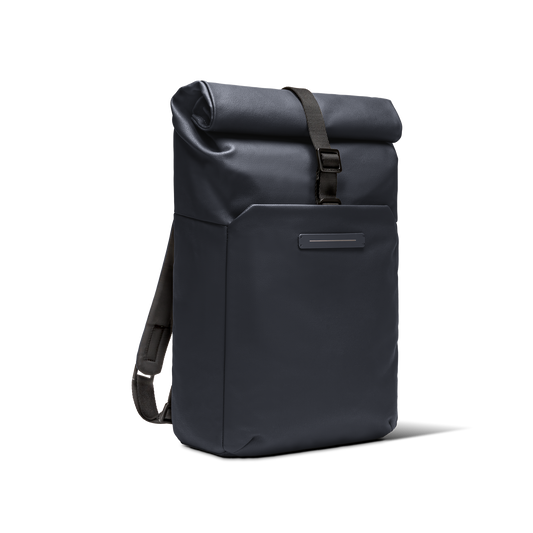
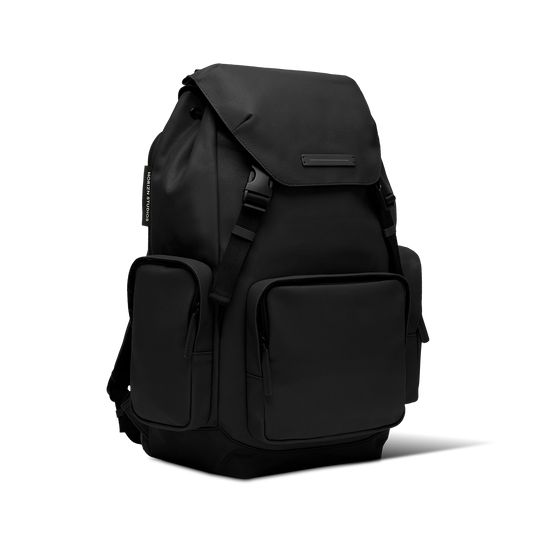
The rolltop format earns its place in the one-bag weekend through a single mechanical advantage: it grows. The SoFo Backpack Rolltop X runs 22L when rolled tight and expands to 28L when the metal hook closure is released — which means packing Friday morning with precision, and arriving Saturday afternoon with room for something purchased in a market. 100% recycled water-sealed cotton canvas, a waterproof bottom, a separate 16" laptop section, and a front pocket for immediate-access items. At 850 g, it is light enough to sit under a desk through a full working day without becoming a problem. The expandability is not a backup capacity — it is the feature the weekend format is designed around.
For a lighter carry on a single overnight, the Shibuya Rolltop at 22–27L is the most minimal option in this category. Premium recycled Re-Nylon with a water-resistant finish, 655 g, a padded interior laptop pocket for devices up to 16", a large front zip pocket, and the same rolltop expansion logic in a slimmer, more urban silhouette. The volume is right for one change of clothes, a compact toiletry kit, a phone charger, and a book. That tightness, for one night, is the point.
For two to three nights and serious one-bag travel, the panel-loading format is the upgrade. The SoFo Backpack Travel opens flat like a suitcase — back-panel loading, 29–34L expandable, recycled waterproof waxed canvas, a padded 16" laptop compartment, hidden rear and side pockets, 1.48 kg. It turns a hotel check-in into a five-minute unpacking exercise rather than a bag-emptying one. The Gion Backpack Travel offers the same panel-loading logic in recycled nylon at 30L — slightly more compact, cabin-approved on most European carriers, a separate 16" laptop compartment, 1.48 kg. Both are the bags for a traveller whose weekend regularly extends into a work morning on Monday, or who wants the discipline of a backpack-only setup with genuine three-day capacity.
The compact case weekend: 33–37L cabin
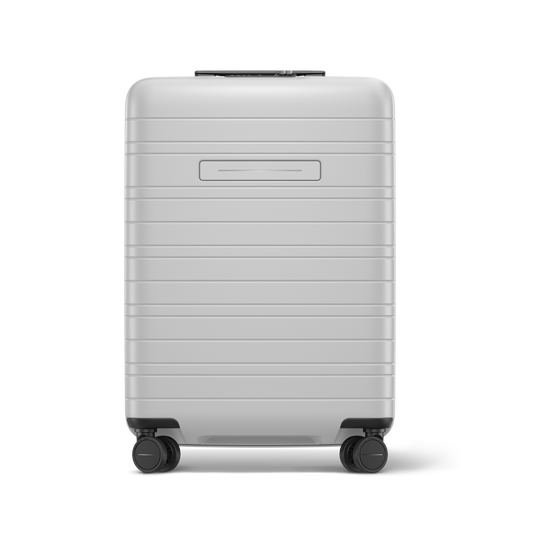
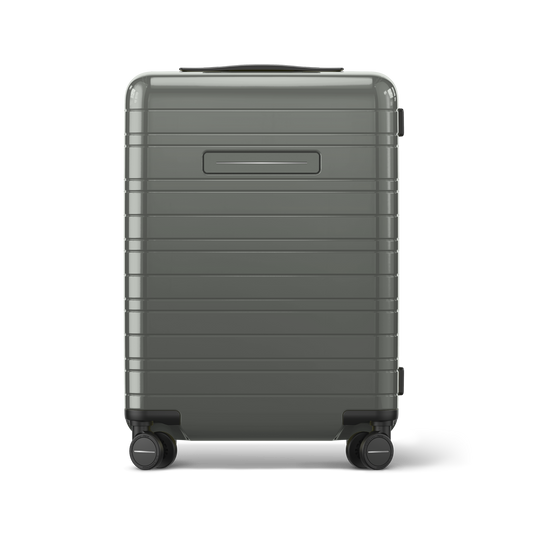
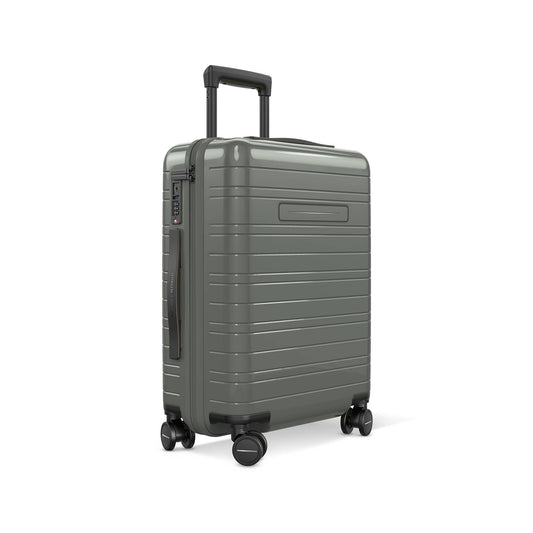
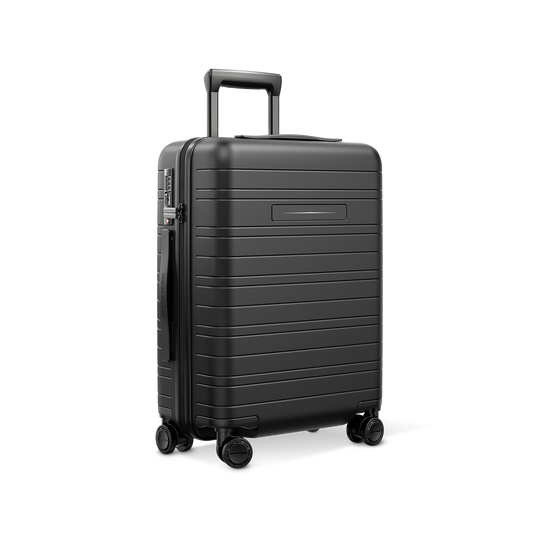
For travellers who prefer a case to a backpack — and for weekends that involve more dressing up, heavier fabrics, or a genuine luxury hotel — the cabin case is the better tool. The H5 Air at 33L and 2.1 kg is the lightest option in the Horizn range. On Ryanair, Eurowings, or Wizz Air, that 2.1 kg empty weight matters — the gap between it and a 2.9 kg case is the margin between a comfortable pack and a gate fee. 55 × 37 × 20 cm, which fits within every European cabin allowance including Ryanair's restrictive basic fare.
The H5 Essential at 36L and 2.9 kg is the more capacious alternative. Premium German polycarbonate, dual mesh dividers inside, lifetime warranty. For a three-day weekend that includes an event with a specific outfit — a wedding, a restaurant with a dress code, a friend's birthday — the additional 3L over the Air is enough to take a proper jacket or heavier shoes without compromise.
The H5 Pro at 36L adds the compression pad and laundry bag to the Essential format. For weekends that involve work mornings or evenings in the hotel room, the Pro interior is the version that keeps clothing flat and separates worn items from clean — the difference between a shirt that looks like it was hung in a wardrobe and one that looks like it was in a bag.
The weekender as bag: 30–40L carry
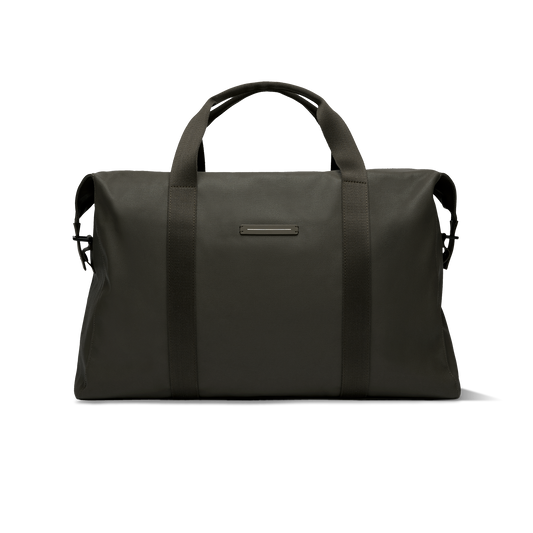
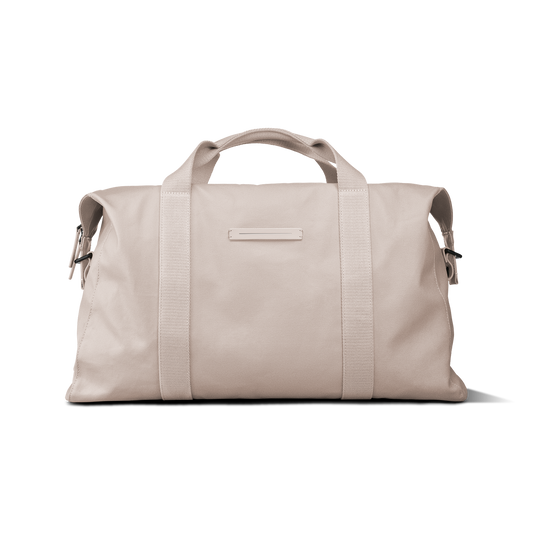
The traditional weekender — the duffel-style bag carried on one shoulder — has returned to European travel in the last few years, specifically in the premium segment where the aesthetic is as important as the capacity. The Shibuya Weekender at 30L and 530 g is the lightest option — Re-Nylon, silky water-resistant finish, spacious main compartment with a double-slider zipper, two handles connected by a loop with a press button, and a back strap compatible with Horizn cases. For a two-night trip, it handles everything a 30L backpack would, but with the carrying format that some travellers prefer and the silhouette that reads quieter in a hotel lobby.
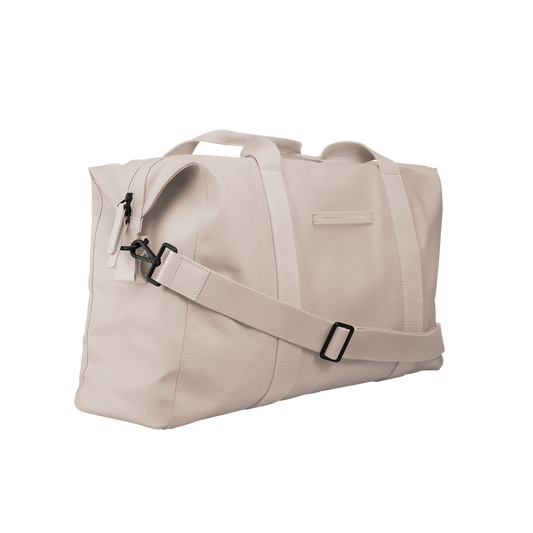
The SoFo Weekender M at 32L in waxed canvas takes the same principle in a more substantial material. 1.48 kg, padded handles, a removable adjustable shoulder strap, interior and exterior pockets, and the water-sealed canvas that handles rain without ceremony. The metal feet on the base keep it off wet floors in station halls and hotel corridors. For a weekend that leans more towards a city break or a countryside escape than a business trip, this is the bag that lands in the right register.
For a longer weekend, the SoFo Weekender L at 40L is the cabin-friendly large-format option — same design language as the Medium, same materials, a longer carry handle that allows it to be worn over the shoulder. At 40L it approaches the capacity of a 36L cabin case without being one. For a Thursday-to-Sunday weekend or a weekend that includes a fuller evening wardrobe, this is the bag that extends the format without moving into checked-luggage territory.
The wardrobe, honestly
A weekend wardrobe is four decisions made well, not a dozen made vaguely. The formula that works, applied before the bag is open: what you travel in (one outfit, worn), one day outfit, one evening outfit, and — for three nights — one additional day option that rotates with the first. That is two to three outfits of components, composed in a tight palette so every top works with every bottom, every jacket works with both.
The practical arithmetic for two nights, packed: one pair of trousers or jeans, one top for Saturday day, one top for Saturday evening, one jumper or blazer that works in both contexts, underwear and socks for each day plus one spare, sleepwear if you use it, one pair of shoes worn in transit. Nothing else. That fits in a 23L backpack with room for a toiletry kit, a phone charger, and a book. The traveller who arrives at Lisbon airport carrying that exact inventory has the calmest weekend available.
For three nights, add one more top (not one more full outfit) and one more pair of underwear and socks. One top. That is the correction from "two days becomes three" to "three days is still manageably one bag." The mistake most people make at three nights is adding a second pair of shoes, a second pair of trousers, and a second outer layer — tripling the wardrobe to cover a 50% longer trip. The honest addition is one top. The rest stays.
Fabrics matter more on a weekend than on a longer trip, counter-intuitively. A linen shirt that wrinkles after Friday's train journey looks wrong for Saturday's dinner, and there is no margin to swap it out. Merino wool for the tops — it regulates temperature, resists odour, wears twice without issue, recovers overnight on a hotel hanger. A cotton-polyester blend for the shirt that needs to look presentable. Wool or a technical blend for the outer layer. Avoid pure cotton knits (heavy, slow to dry), avoid linen (wrinkles in transit), avoid anything that requires an iron. The weekend does not accommodate a steamer.
Toiletries: the drawer, not the assembly line
The largest single gain in weekend packing efficiency comes from having a pre-packed toiletry kit that lives in a drawer between trips. 100 ml limits on every liquid. Only the things used every day. Toothbrush, toothpaste, deodorant, face cleanser, moisturiser, lip balm, any prescription medication. That is it. For weekend use, the kit does not need to be rebuilt from bathroom shelves every Friday — which is the step that typically produces either forgetting (the charger, the medication) or over-including (the full-size shampoo that is anyway going to be provided by the hotel).
Hotels above budget level provide shampoo, conditioner, body wash, a hairdryer. A weekend traveller's toiletry bag does not need to duplicate these. The things to pack are the things specific to you — a particular skincare product, a specific medication, a razor system that matters, contact lenses and solution. Everything else is available at the destination if genuinely needed. The small pharmacy around the corner from a Berlin Airbnb at 9am on Saturday has the paracetamol. It does not need to travel on Friday.
The Friday evening departure
There is a specific genre of weekend travel that starts on a Friday evening after work. The train from the office to the airport, the security queue, the gate, the flight, the arrival in a city that is already three hours into its own Friday evening. For this format — which is how most European weekends are actually conducted — the bag needs to work in transit and on arrival without a pause for reorganisation.
This is where the bag choice reveals its value. A 23L backpack that started the afternoon under a desk in an office and ends it at a table in a restaurant in Copenhagen Nordhavn has been, functionally, three different bags: a work bag, a transit bag, and an evening bag. A good weekend backpack has to do all three without adjustment. The SoFo Backpack City and Gion Backpack Pro both clear this bar — they are serious enough for the office, compact enough for the flight, quiet enough to sit next to a chair at dinner. A traditional bulky travel backpack cannot do all three.
The evening arrival is the other moment that weekend packing has to handle well. The hotel room is small, the lighting is low, dinner is in forty minutes. Unpacking has to be a five-minute act, not a thirty-minute one. Which is why the packed interior matters as much as the bag: packing cubes that separate tops from bottoms from underwear, a toiletry bag that goes directly into the bathroom without further sorting, shoes already worn, outerwear already on the chair. Within ten minutes of arriving, the room is unpacked and the evening begins.
The quiet efficiency of return
The Sunday return is usually what tests whether the weekend was well-packed. If the bag closes more easily going home than it did coming out — if everything still has its place, if nothing has to be crammed, if the worn clothes are separated from the clean — the packing was well-judged. If the return involves sitting on the suitcase to zip it, something went wrong in the first direction.
Horizn's Pro series handles this specifically. The laundry bag that comes as standard in the H5 Pro separates what has been worn from what has not, which keeps the organised interior organised through the end of the trip. The compression pad in the lid holds clothing flat against the base, which prevents the loose repacking that most travellers do at five in the morning on Sunday when they do not want to think. The interior on the Sunday return looks like the interior on the Friday departure. Which is the subtle victory of a case designed for repeat travel rather than one trip.
For travellers who do not carry a Pro-series case, the same logic applies in simpler form: a separate bag inside the bag for worn clothes (a cotton tote, a hotel laundry bag, any sealable pouch), so that the clean items stay separate from the ones being returned to the laundry at home. This is not a luxury. It is the difference between unpacking calmly on Sunday evening and unpacking on Monday morning because you are too tired to do it the night you return.
What the weekend earns
A well-packed weekend returns something specific that most travel does not: a sense that the trip was entirely its own thing, not an errand embedded in logistics. The Friday evening was Friday evening. The Saturday was Saturday. The Sunday morning walk was a walk. The bag was present but not active in the story — it carried what needed carrying and disappeared into the corner of hotel rooms and café chairs while the actual trip happened around it.
The weekends that are remembered are the ones where the traveller was present in the city rather than present in the bag. The specific calm of arriving in a new place with everything one needs and nothing one doesn't, of moving through transit without the usual friction, of putting the bag down in a hotel room and feeling — within ten minutes — that the trip has begun. This is what good weekend packing produces. It is not a technique. It is a small, repeatable set of decisions made before the bag is opened, so that during the weekend itself there are no decisions to make about objects and every decision available to make about the city.
Frequently asked questions
What should I pack for a weekend trip?
For two nights: one outfit worn in transit, one for Saturday day, one for Saturday evening, one outer layer that works across contexts, underwear and socks for each day plus one spare, sleepwear, one pair of shoes worn. A compact toiletry kit with 100 ml liquids only. Phone, charger, maybe a book. That fits in a 23L backpack or a 33L cabin case with room to spare. Every item should work with at least one other; anything contingent on a scenario that has not been confirmed stays home.
What is the best bag for a weekend trip?
For one night away: the Gion Backpack Pro (23L, 750 g) — lightest serious option with a 16" laptop compartment. For two nights: the SoFo Backpack City (23–26L expandable) in waxed canvas, or the H5 Air (33L, 2.1 kg) cabin case if you prefer rolling to carrying. For two to three nights one-bag: the Gion Backpack Travel (30L) with suitcase-style panel opening. For a more formal weekend requiring a blazer or dress shoes: the H5 Essential or H5 Pro (36L) cabin case.
How do I pack for a 3-day trip in a carry-on?
Apply the one-top addition: the two-night wardrobe (one transit outfit, one day outfit, one evening outfit, one outer layer) plus one extra top. Not one more complete outfit. Use a tight colour palette so every piece combines with every other. Merino wool tops wear twice without issue and regulate temperature across contexts. A 36L cabin case or 30L panel-loading backpack handles three nights with a compact toiletry kit and basic tech — no checked luggage needed.
Is a backpack or suitcase better for a weekend trip?
Either works for a weekend. The backpack (23–30L) is faster through transit, hands-free, and suits walking-heavy trips in cities like Lisbon or Amsterdam where cobblestones and stairs are constant. The cabin case (33–36L) takes weight off the shoulder on longer transit days and handles more formal wardrobe better (blazer, dress shoes). For mixed itineraries — arrive Friday, business Monday — the M5 Pro with front-pocket laptop access is the middle option. Neither is wrong; the choice depends on how much walking the weekend involves and how formal the wardrobe needs to be.
How much does a packed weekend bag weigh?
A well-packed two-night bag weighs 4–6 kg total: the bag itself (1–2 kg for a backpack, 2–3 kg for a cabin case), plus 3 kg of clothing, toiletries, and accessories. That weight sits comfortably within any European airline's cabin allowance. If a weekend bag weighs more than 7 kg, something has been included that did not need to be — usually a second pair of shoes, a redundant outer layer, or full-size toiletries.
Can I travel for a weekend with just a personal item?
Yes, for one night or a minimal two-night trip. A 23L backpack (the Gion Backpack Pro or SoFo Backpack City at its compact size) fits within the personal item allowance on every European carrier including Ryanair's restrictive basic fare. This is the cheapest possible way to fly — no cabin bag surcharge, no priority boarding required. The wardrobe has to be genuinely minimal: one change of clothes, compact toiletries, no backup items at all. For anyone who can travel with that discipline, the personal-item-only weekend is the fastest format available.
Should I check luggage for a weekend trip?
No, for almost any weekend trip. Checking luggage adds 30–60 minutes each way at the airport, the risk of delay or loss, and typically a fee on budget European carriers. A cabin case or backpack handles two to three nights for any reasonable traveller. The exceptions are weekends involving sports equipment, a full dress or suit that cannot be folded, or a genuine wedding with a specific outfit — contexts where the wardrobe itself exceeds cabin capacity. For the standard weekend, carry-on only is faster, cheaper, and calmer.


 Bestseller
 Bestseller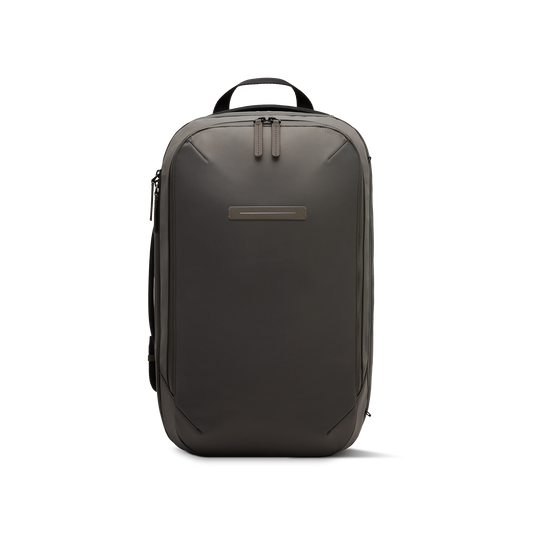
 Bestseller

 -30% Essential+4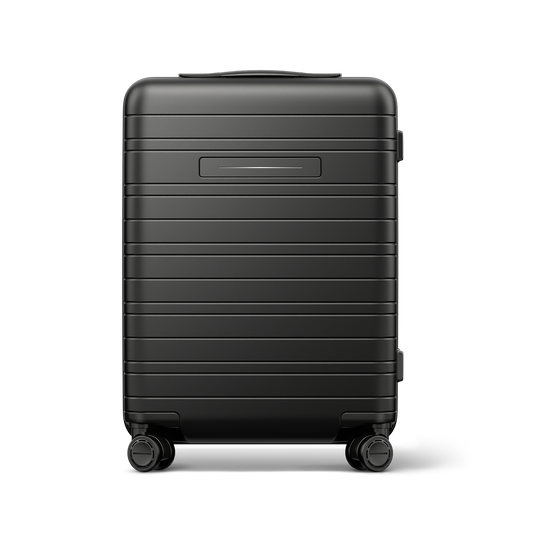
 Bestseller